








-
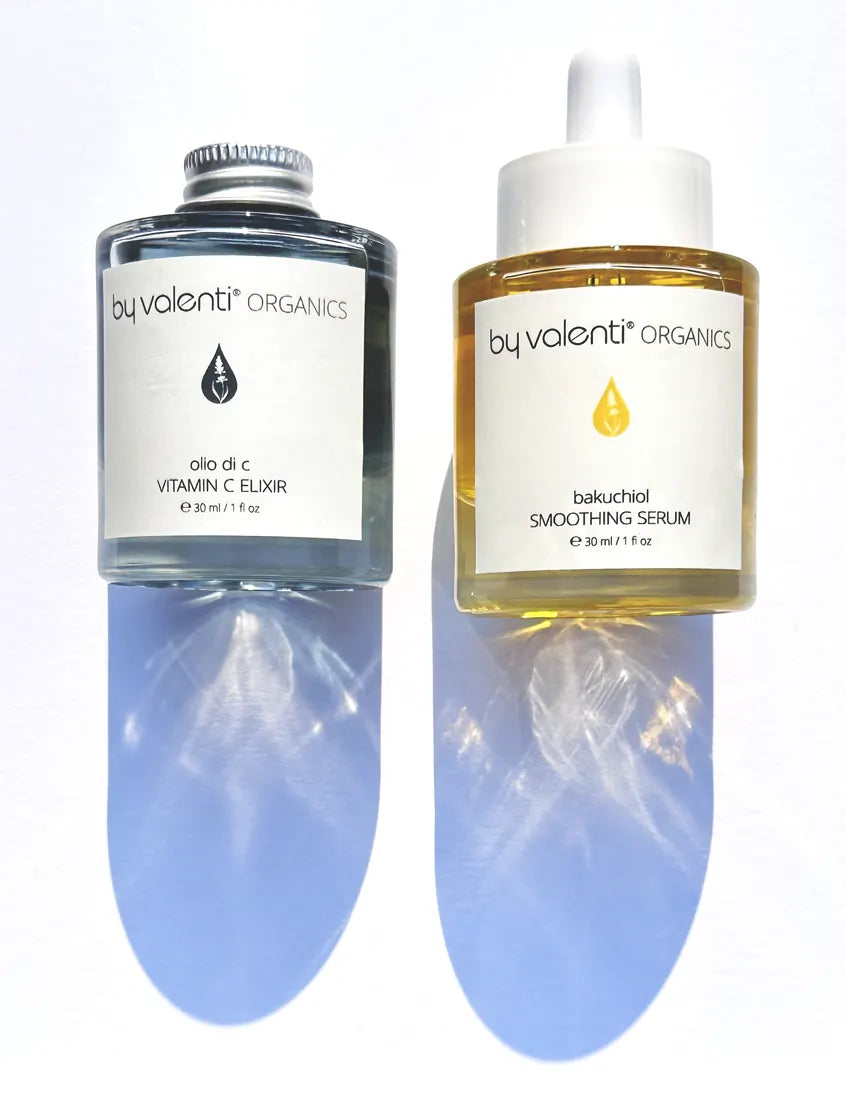
Bakuchiol Smoothing Serum  Best Seller
Bakuchiol Smoothing Serum
Bakuchiol Smoothing Serum — Bakuchiol 1% + Buriti oil + Olive squalane
$140.00 USD -
Bakuchiol Night Repair Cream  Best Seller
Bakuchiol Night Repair Cream
Bakuchiol Night Repair Cream — Bakuchiol 1% + Retinol .3% + Hyaluronic acid + Ceramides
$120.00 USD -
Bakuchiol Smoothing Serum & Night Repair Cream Bundle  Sale
SaleBakuchiol Smoothing Serum & Night Repair Cream Bundle
Bakuchiol Smoothing Serum & Night Repair Cream Bundle — Bakuchiol 1% + Retinol + Hyaluronic Acid + Lacto Ceramides
Sale price $234.00 USD Regular price $260.00 USD -
Olio di C 10% Vitamin C Elixir and Bakuchiol Smoothing Serum Set  Sale
SaleOlio di C 10% Vitamin C Elixir and Bakuchiol Smoothing Serum Set
Olio di C 10% Vitamin C Elixir and Bakuchiol Smoothing Serum Set — 1% Bakuchiol + 10% Vitamin C with azulene-rich Blue Tansy
Sale price $225.00 USD Regular price $250.00 USD -
L’Essenza Triestina Repair Bundle  Sale
SaleL’Essenza Triestina Repair Bundle
L’Essenza Triestina Repair Bundle — Bakuchiol 1% + Retinol + Hyaluronic Acid + Ceramides + 10% Niacinamide
Sale price $260.00 USD Regular price $295.00 USD -
Chromatic Ritual - By Valenti Serum Collection  Sale
SaleChromatic Ritual - By Valenti Serum Collection
Chromatic Ritual - By Valenti Serum Collection — Three high-performance serums. One refined Italian ritual.
Sale price $387.00 USD Regular price $430.00 USD -
Mini Serums Gift Set  Sale
SaleMini Serums Gift Set
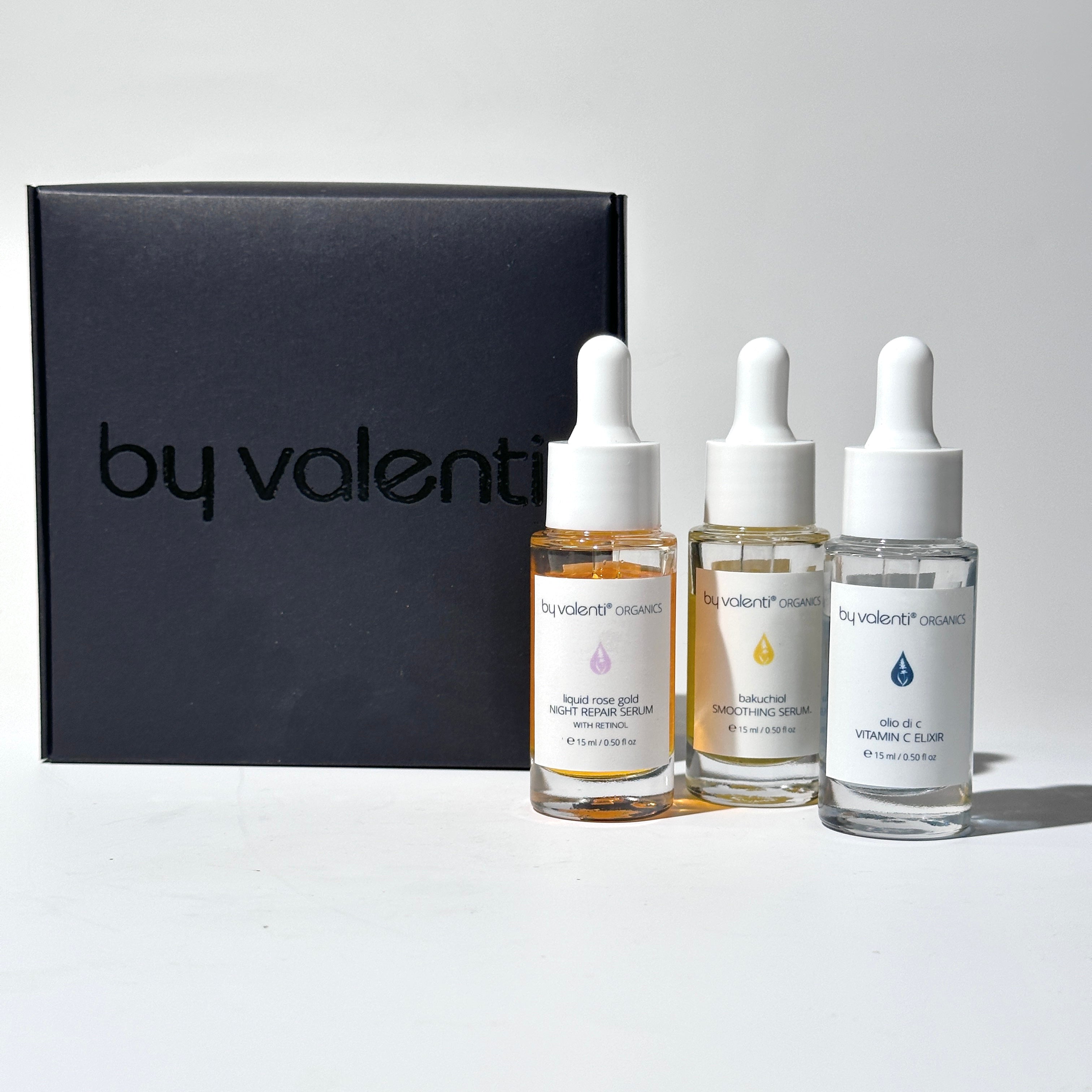
Mini Serums Gift Set — Bakuchiol 1% + Retinol .3% + Vitamin C 10%
Sale price $148.50 USD Regular price $165.00 USD
What Is Bakuchiol and Why Does the Source Matter?
Bakuchiol is a meroterpenoid extracted and isolated from the seeds of Psoralea corylifolia, known as the babchi plant — a leguminous plant endemic to India and the Himalayan regions of Pakistan and China. The plant has been used in Ayurvedic and Chinese traditional medicine for centuries, but the isolated bakuchiol molecule was not introduced into cosmetic applications until 2007, when Sytheon developed and commercialized it as Sytenol® A.
The distinction between isolated bakuchiol and other derivatives of the same plant matters. Psoralea corylifolia extract and babchi oil — both widely found in skincare products marketed as "bakuchiol" — are not the same ingredient. Neither contains meaningful concentrations of the bakuchiol molecule. Both contain high levels of psoralens, furanocoumarins that are phototoxic, known to irritate skin, cause blistering, and increase UV-related skin cancer risk. They are not retinol alternatives. They are contraindicated for topical use.
Sytenol® A is the only bakuchiol with a complete toxicology dossier, full REACH registration, and China market authorization. It is the ingredient used in the peer-reviewed clinical studies that established bakuchiol's efficacy. It is the only bakuchiol By Valenti uses.
Clinical Evidence — What Bakuchiol Actually Does
Bakuchiol's efficacy is not marketing language. It is documented in peer-reviewed studies published in the International Journal of Cosmetic Science and the Journal of Cosmetic Dermatology:
Wrinkles and fine lines
In a 12-week clinical study, Sytenol® A bakuchiol produced a 20% reduction in wrinkle depth — comparable to retinol, without the associated irritation or barrier disruption.
Hyperpigmentation
After 12 weeks, Sytenol® A produced a 59% reduction in hyperpigmentation versus 44% for retinol — outperforming retinol on this measure while remaining tolerable for sensitive skin.
Collagen and elastin
Bakuchiol stimulates collagen types I, III, and IV and maintains elastin production through pathways that functionally mirror retinol activity without binding to retinoic acid receptors — which is why it produces the anti-aging results without the retinoid side effect profile.
Skin tolerance
Unlike retinol, bakuchiol does not cause photosensitivity, peeling, or a purge period. It is suitable for use morning and evening, across all skin types including sensitive, reactive, and pregnancy-aware skin.
The By Valenti Bakuchiol Formulas
Bakuchiol Smoothing Serum — Beauty Shortlist Award Winner 2023
A lightweight serum formulated with 1% Sytenol® A bakuchiol in a base of skin-compatible botanical oils including jojoba, moriche palm fruit oil, camellia seed oil, and olive squalane. Designed for daily use, morning and evening, as a targeted anti-aging and skin-smoothing treatment. Suitable for all skin types including sensitive and reactive skin.
Bakuchiol Night Repair Cream — Beauty Shortlist Award Winner 2023
A night cream formulated with 1% Sytenol® A bakuchiol, 0.3% retinyl palmitate, and ceramides. The combination of bakuchiol and retinyl palmitate — a gentler vitamin A ester — supports overnight skin renewal while ceramides reinforce the skin barrier and restore hydration. Designed for nighttime use as a repair and regeneration treatment.
Using both together
The serum and night cream are designed to work as a two-step evening system or independently. When used together, bakuchiol in the serum provides the primary anti-aging activity while the night cream adds barrier repair, ceramide replenishment, and the complementary retinyl palmitate layer. For retinol-sensitive skin, the serum alone delivers clinically backed results without any vitamin A derivatives.
Bakuchiol vs Retinol — The Honest Comparison
Retinol is a vitamin A derivative that accelerates cell turnover and stimulates collagen production. It is one of the most clinically validated anti-aging ingredients in skincare. It is also known for causing dryness, peeling, redness, and photosensitivity — particularly during the initial adjustment period — and it requires sun avoidance or strict SPF use.
Bakuchiol is not a retinoid. It does not share retinol's molecular structure. It produces comparable results through different receptor pathways, without the side effect profile that makes retinol difficult to tolerate for a significant portion of the population.
For skin that tolerates retinol well, bakuchiol is a comparable alternative. For sensitive, reactive, rosacea-prone, or pregnancy-aware skin — where retinol is contraindicated or poorly tolerated — bakuchiol is the clinically validated option that delivers the same category of results without the trade-offs.


